
Bristol’s major rooftop solar fires expose a public building safety blind spot
Solar panels are the poster child of Britain’s clean energy transition, but after major roof fires at a science museum and maternity hospital in Bristol, experts are calling for major changes to how we install, maintain, and understand solar panels.
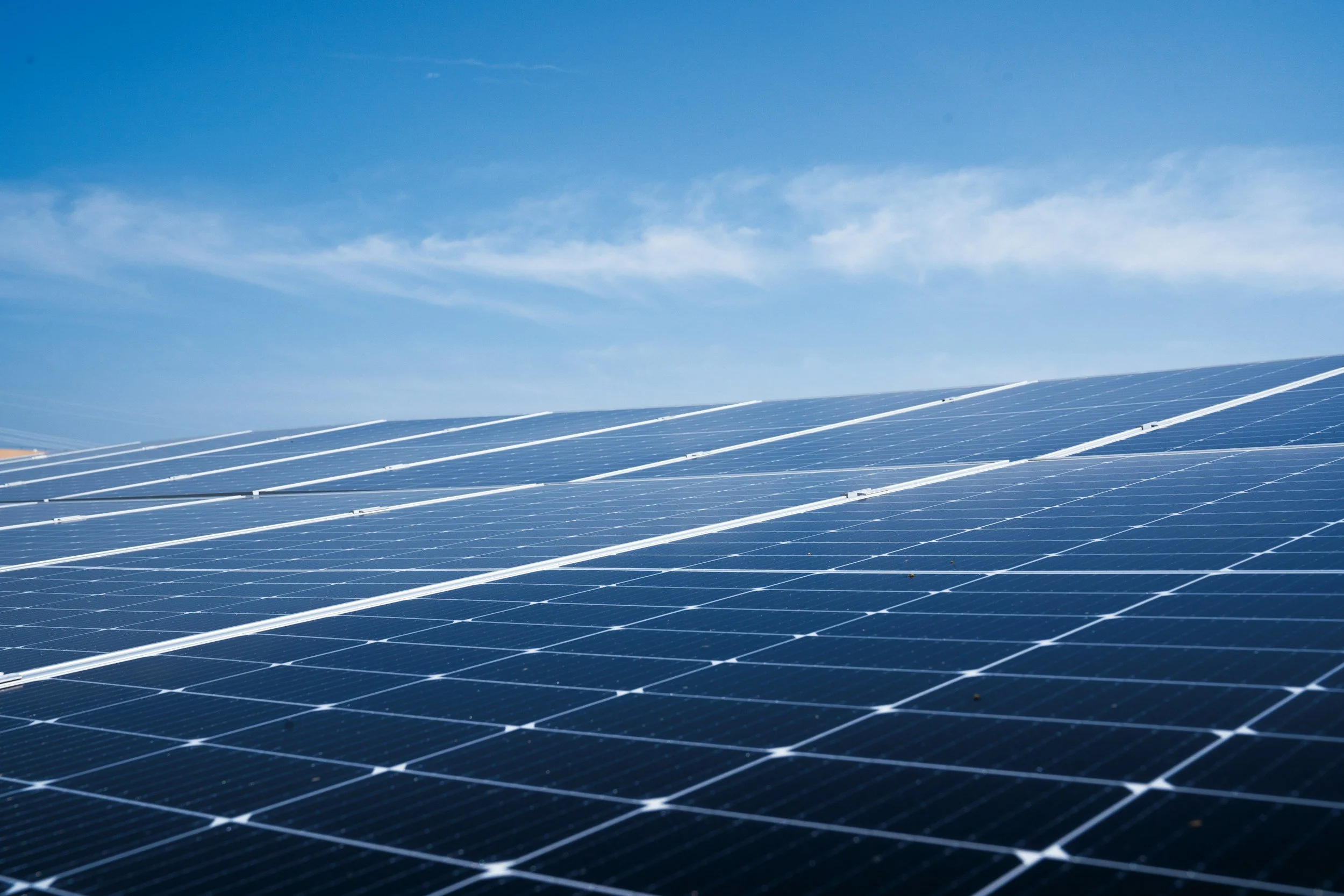
Solar panels provide clean energy to households and public buildings in the UK. Royalty-free image.
As smoke filled the sky above St Michael's Hospital in Bristol last May, women and their newborn babies were rapidly evacuated to University of Bristol buildings and the waiting ambulances, as onlookers stopped and recorded the blazing rooftop.
After investigation, the fire was found to be accidental by Avon Fire & Rescue Service, with the cause described as a fault in the solar panel system. According to the official incident report, the source of ignition was “wiring, cabling or plugs” located on the roof. In response to an FOI request, Avon Fire further explained that there was an “unidentified electrical fault within the hospital roof’s solar panel system, either in panel or associated wiring”. The rapid spread of the fire across the rooftop was credited to a wind and the presence of combustible materials, such as roof felt and the plastic frames of the solar arrays.
Despite the damage, the hospital was able to welcome patients back inside the same day. Thankfully, there were no injuries this time. But as solar panelling spreads across schools, hospitals, museums, and more, questions are being raised about their safety and correct operation. In particular, are fire safety systems, inspection records, and best maintenance practices keeping pace with the rapid development and roll-out of solar panels?
Three years prior to the fire at St Michaels, Bristol was hit with another high profile solar fire at a public building.
On 9 April 2022, a fire broke out on the rooftop of Bristol’s city centre science museum We The Curious, which staff and visitors were alerted to by an off-duty police officer who had noticed smoke coming from the roof.

We The Curious was closed for 2 years for renovations after the 2022 fire. Image: Mark Boyce, CC BY-SA 3.0, via Wikimedia Commons.
Once again no casualties occurred, but the building was not so lucky. In the incident report for the fire, damage was recorded as being between 501 to 1,000 square metres of the building. The control log reported the cause as “Accidental ignition - caused by electrical fault with solar panels”.
We The Curious later stated that the fire occurred when “a solar panel damaged by birds triggered a fault in the electrical system”. The fire itself was largely contained to the rooftop and solar panels, but the water pumped out to extinguish the fire caused extensive damage within the building. As a result, the science museum remained closed to the public for two years while works took place.
Together, these two independent events do not necessarily point to solar photovoltaic (PV) panels being inherently dangerous.
“Solar PV fires remain relatively uncommon when compared with the total number of PV systems installed in the UK,” said Luke Gonzales, a PV consultant and participant in the PV Fire Intelligence Network. “That is an important starting point because we should not create the impression that solar PV is inherently unsafe.
“However, this incident may be low in frequency but have high consequence. The risk is not zero.”
What counts as a solar fire?
The UK does not currently have a clear picture of how many fires are caused by, not just involving, solar panels.
Data from the Ministry of Housing, Communities and Local Government indicates that that fires in England recorded as having “solar panel” or “photovoltaic panel” mentioned in their fire service free-text records increased from 3 in 2010 to 81 in 2024, with a further 59 recorded in the first 6 months of 2025.
However, this data does not necessarily mark these fires as having been caused by solar PV. They simply indicate that the terms linked to solar PV were mentioned somewhere in the reports.
The same issue can be found at a much more local level. In its response to an FOI request, Avon Fire shared that they do not have “a specific recording category for ignition source for fires caused by solar panels”. Solar panel fires are instead typically recorded under broad and diverse categories, such as accidental equipment or appliance faults, making them hard to identify.
Gonzales said, “There is a big difference between a fire being caused by a PV system, a fire involving a PV system, and a fire where PV was merely present on the roof.
“Those are three very different things, but they can easily become blurred in incident reporting.”
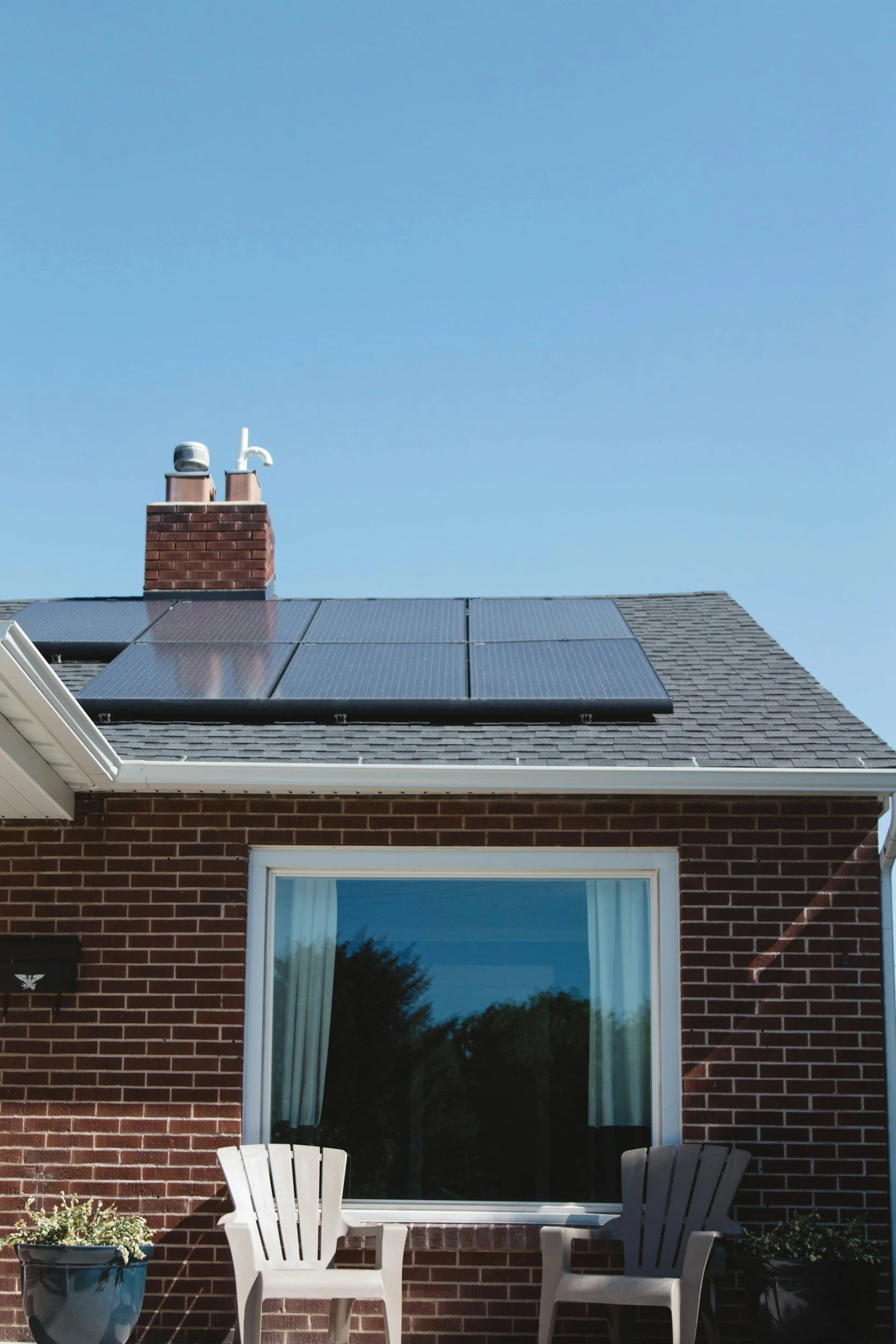
solar panel fires have different impacts depending on a building’s use. Royalty-free image.
Essentially, a fire that is caused by a solar PV connector is different to a fire caused by a faulty kitchen oven in a house that happens to have a solar PV system on the roof, but both incidents may be recorded in a similar way, making current data on fires caused by solar panels unreliable. As the number of buildings with solar PV systems increases, so too will the number of housefires where the panels happen to be present.
Raman Chagger, principal consultant at BRE, shared that this lack of high-quality data is partly what led to the formation of the PV Fire Intelligence Network, or PV-FIN.
“I thought that there is not enough data being gathered, reliable data,” he said. “I know that the Fire and Rescue Service do gather data, but it’s unreliable.”
PV-FIN is trying to gather better data from across both the fire and solar industries. They are engaging with fire investigators, forensic specialists, solar panel installers and maintainers, and others with pertinent technical or incident knowledge.
“We need to get together,” Chagger said. “We need to start to research and understand the causes of PV fires. We need to really get data that is reliable.”
Why rooftop PV fires are different
Having your electrical generator on the roof presents some difficulties.
“Solar brings a unique challenge,” Gonzales said. “You cannot turn off the system that’s continually generating.”
Solar panels can continue to produce direct current (DC) electricity even if a building’s power supply is isolated. This means that, in the event of a fire, live DC cables and components may be present on the rooftop, creating an even more dangerous situation for firefighters in the event of a fire, as well as for any contractors attending to the solar PV system.
In a 2017 BRE report into fire and solar PV systems, different components and mechanisms are identified that may have caused or assisted in the escalating of fires. These include electrical arcing as a key ignition mechanism and moisture ingress. Human installation and maintenance errors were also noted, including incorrectly crimped connector contacts, the presence of incompatible sockets and plugs, and poorly soldered joints. The reports database points to DC isolators and connectors as most often being implicated in these types of fires.
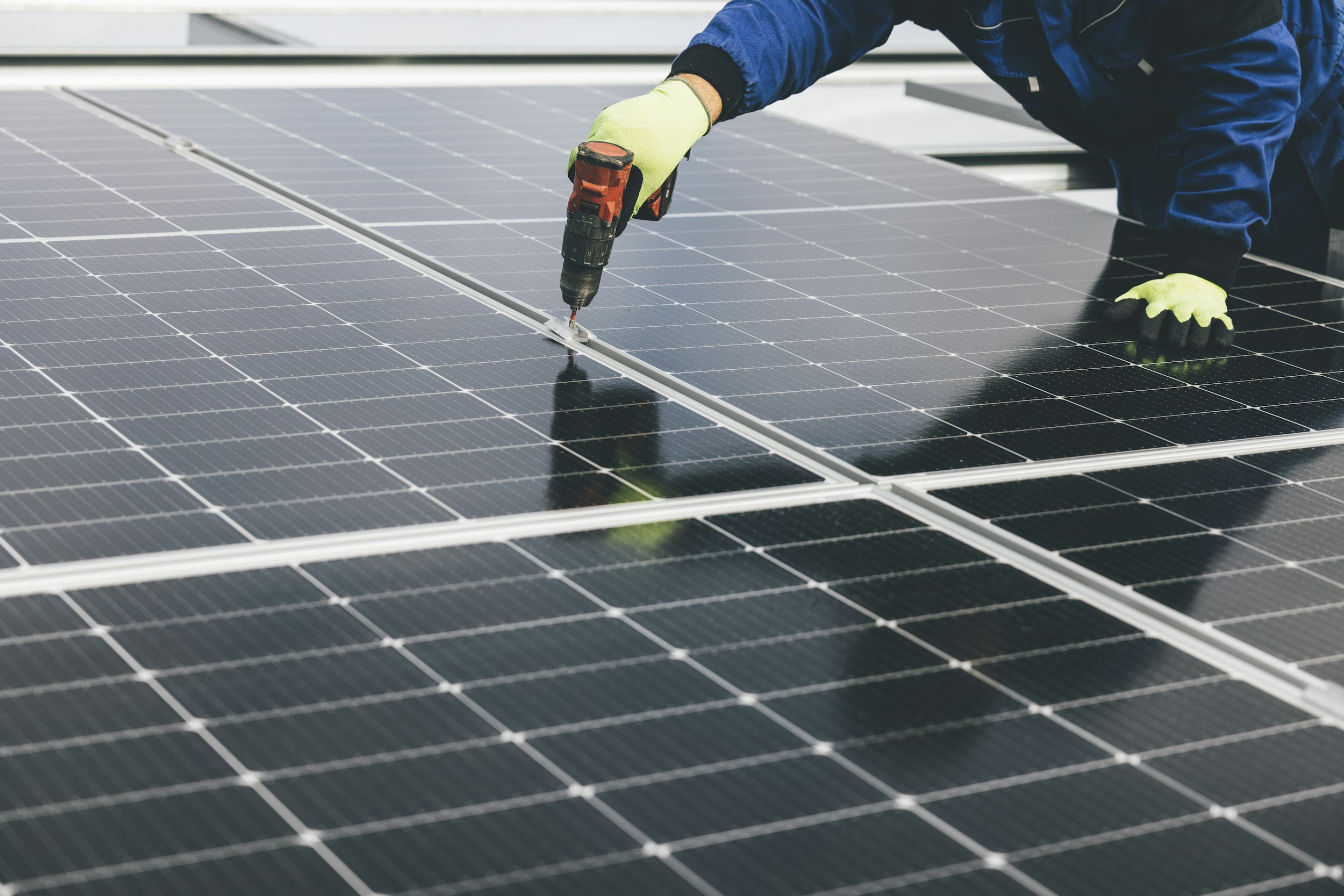
Faults can be introduced through solar panel installation. Royalty-free image.
Gonzales said that he worries more about the wider system than the safety of the panels themselves. “In many cases, it is not simply ‘the panel caught fire’,” he said. “It is the wider rooftop electrical system, its installation quality, its environment, and its maintenance history.”
As well as sharing concerns around human error resulting in poor cable management and DC connector installation, he highlighted issues such as failed isolators, inverter faults, and bird or pest damage. The lack of inspection and prevalence of ageing systems that have been poorly maintained further exacerbate these issues and increase the risk of fire.
Animal intrusion, such as that which led to the fire at We The Curious, is difficult to stop. Avon Fire has advised that building owners should do what they can in terms of preventing the presence and nesting of animals, removing nests lawfully where needed.
Who is responsible for solar on public roofs?
The most significant difference between a household and a public building solar PV system is less about the technology and more about the human activities that occur within, and the different risks these places carry. In public buildings, there tend to be large numbers of visitors, making potential evacuations complex, especially when factoring in potentially complex floorplans and large floor area. When firefighters arrive on the scene, they need information quickly on roof layout, access routes, and isolation points.
Gonzales said, “for public buildings, PV should be treated as a building safety issue, not just an energy project that ticks a box for sustainable energy.
“The PV design should not be developed in isolation from the building”.
He further explained that good design for solar PV systems begins by reviewing the building itself and its different safety aspects. This includes roof construction, coverings, and drainage; fire strategy and access routes; and cable routes, inverter locations, and isolation arrangements.
That is where the St Michael’s fire becomes more than a one-off incident. Public board papers from University Hospitals Bristol and Weston NHS Foundation Trust said the rooftop PV system was owned and maintained by Bristol City Council under a 20-year lease with the trust. After the fire, all remaining PV panels were removed from the St Michael’s roof, and a process began to inspect PV panels across the hospital estate.
That kind of arrangement is not unusual. Rooftop solar may be owned by one organisation, hosted on a building occupied by another, installed by a contractor, maintained by a separate company and overseen day-to-day by facilities staff who may not be PV specialists.
Gonzales said that can create accountability gaps. “The building owner, occupier, landlord, tenant, PV system owner, installer, maintenance contractor and facilities management provider may all be different organisations,” he said. “If roles are not clearly defined, the system can fall into a grey area.”
His concern is simple: everybody may assume somebody else is checking the system. “The building occupier may assume the PV owner is maintaining it,” he said. “The PV owner may assume the facilities management contractor is reporting roof issues. The FM contractor may not be competent to inspect DC electrical risks. The original installer may no longer be involved.”
Avon Fire’s FOI response also points to where the legal responsibility currently sits. It said fire safety officers conducting an audit would ask to see solar system maintenance and testing records, and that the responsible person for the site must ensure these comply with British Standards Institution or manufacturer guidance. The system should be noted within the site’s fire risk assessment. But it added: “Currently, there is nothing specific to solar panels under the Fire Safety legislation.”
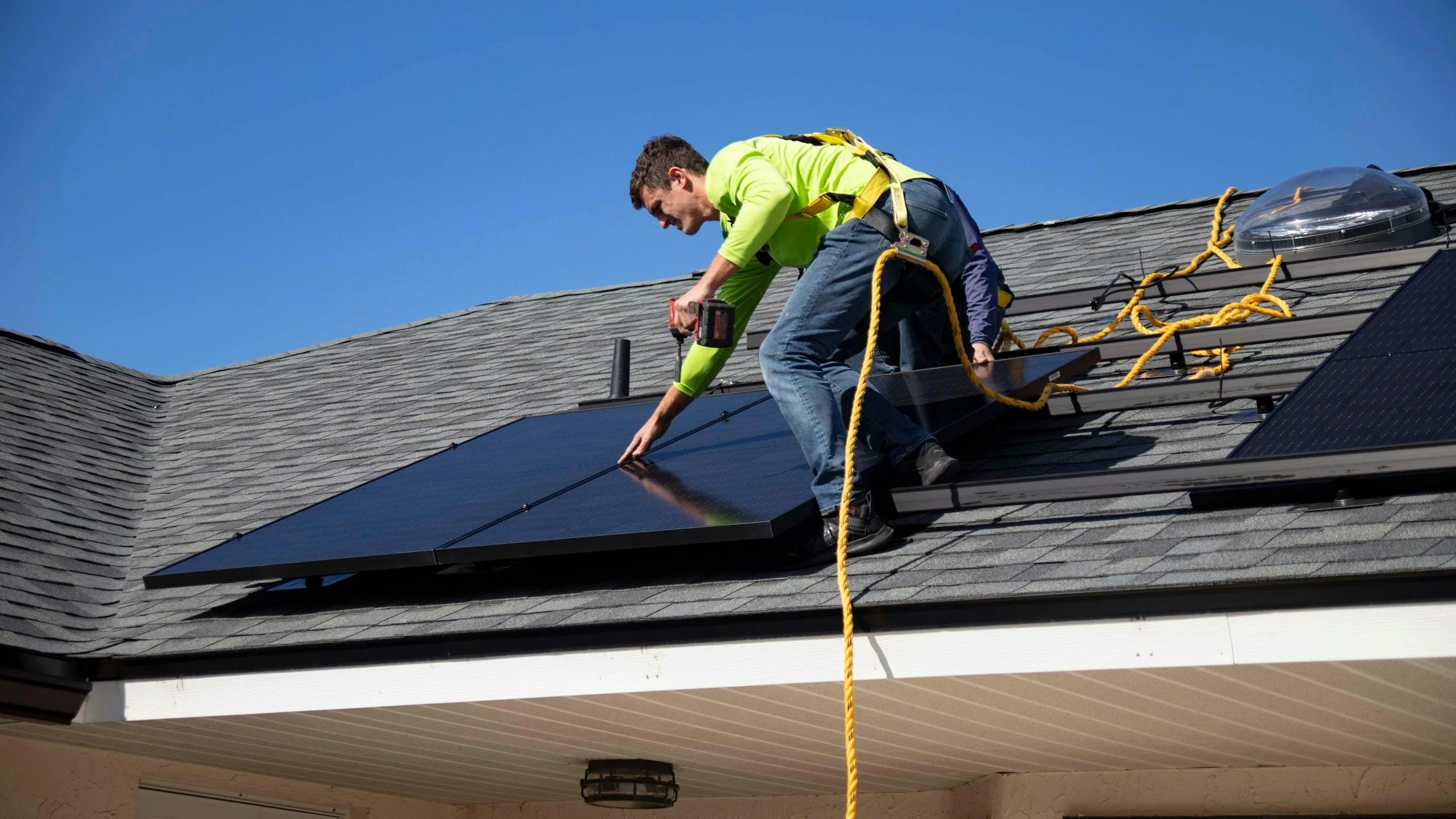
Who is responsible for ensuring the safety of a solar PV system? Royalty-free image.
The end of “fit and forget”
One phrase came up repeatedly in the expert interviews: “fit and forget”. During the feed-in tariff era, from around 2010 to 2016, many PV systems were sold as low-maintenance assets that would sit on roofs and quietly generate electricity. Some of those systems are now more than a decade old.
Gonzales said the industry is having to undo that old narrative. “Historically, solar PV was sold on that pretense so that it is a fit and forget technology,” he said. “But we’re actually kind of in industry undoing that narrative.”
Maintenance, he argues, should be treated as normal, not exceptional. PV systems contain electrical components exposed to weather, movement, birds, debris, roof changes and ageing. They may also sit in places that are awkward and expensive to access. “We service our car, we service our boiler,” Gonzales said. “Why, you know, we’ve got this ignition risk on our roof — why are we not wanting to service it?”
He is careful not to suggest that age is the only risk. Some fires involve newer systems too. Poor workmanship, incorrect tooling, mismatched components and inadequate design can cause problems early in a system’s life. Still, the maintenance question is becoming sharper as the number of older installations grows.
Chagger said that as more systems are installed, and as they age, it is reasonable to expect more faults in absolute terms. “It’s not that the systems are unsafe,” he said. “But we are having more and more of them put in at a geometric rate, and if there are going to be issues, then we also should expect that the frequency of this is going to start to escalate.” The question is whether the evidence base is good enough to spot patterns before they become bigger problems.
PV-FIN hopes to publish findings and recommendations once its current data-gathering work is complete. Chagger said the aim is not to create fear, but to help the sector improve. “The whole purpose of this work isn’t to create alarm,” he said. “It’s to be proactive.”