CAMPAIGNERS REVEAL ALTERNATIVE PLAN FOR BRISTOL ZOO GARDENS
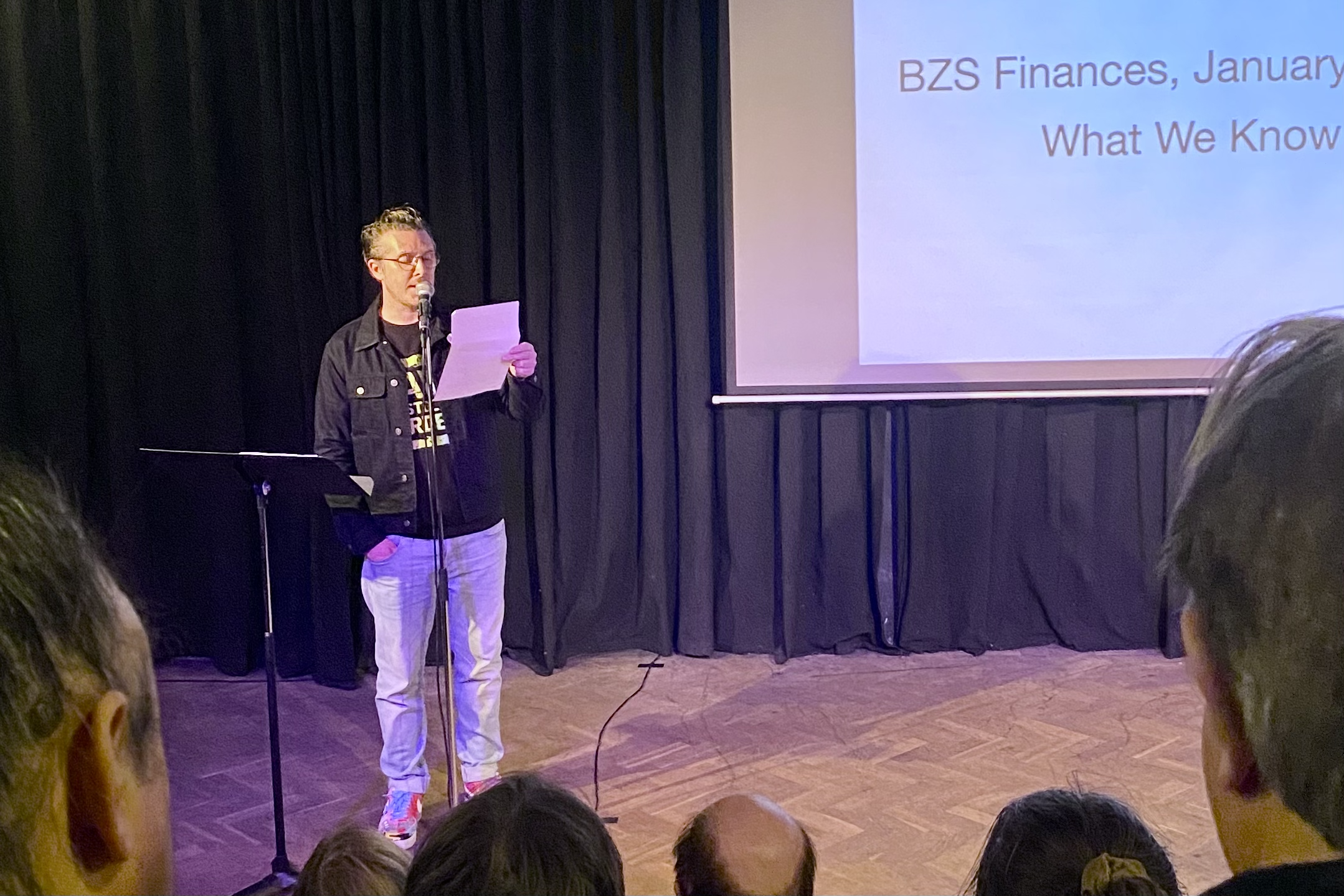
Tom Jones, organiser of the Save Bristol Zoo Gardens campaign, speaking at a public meeting in Clifton on Wednesday evening. Image: Stephanie Meadows
Campaigners opposing housing development at the closed Bristol Zoo Gardens site outlined an alternative proposal at a public meeting in Clifton earlier this week.
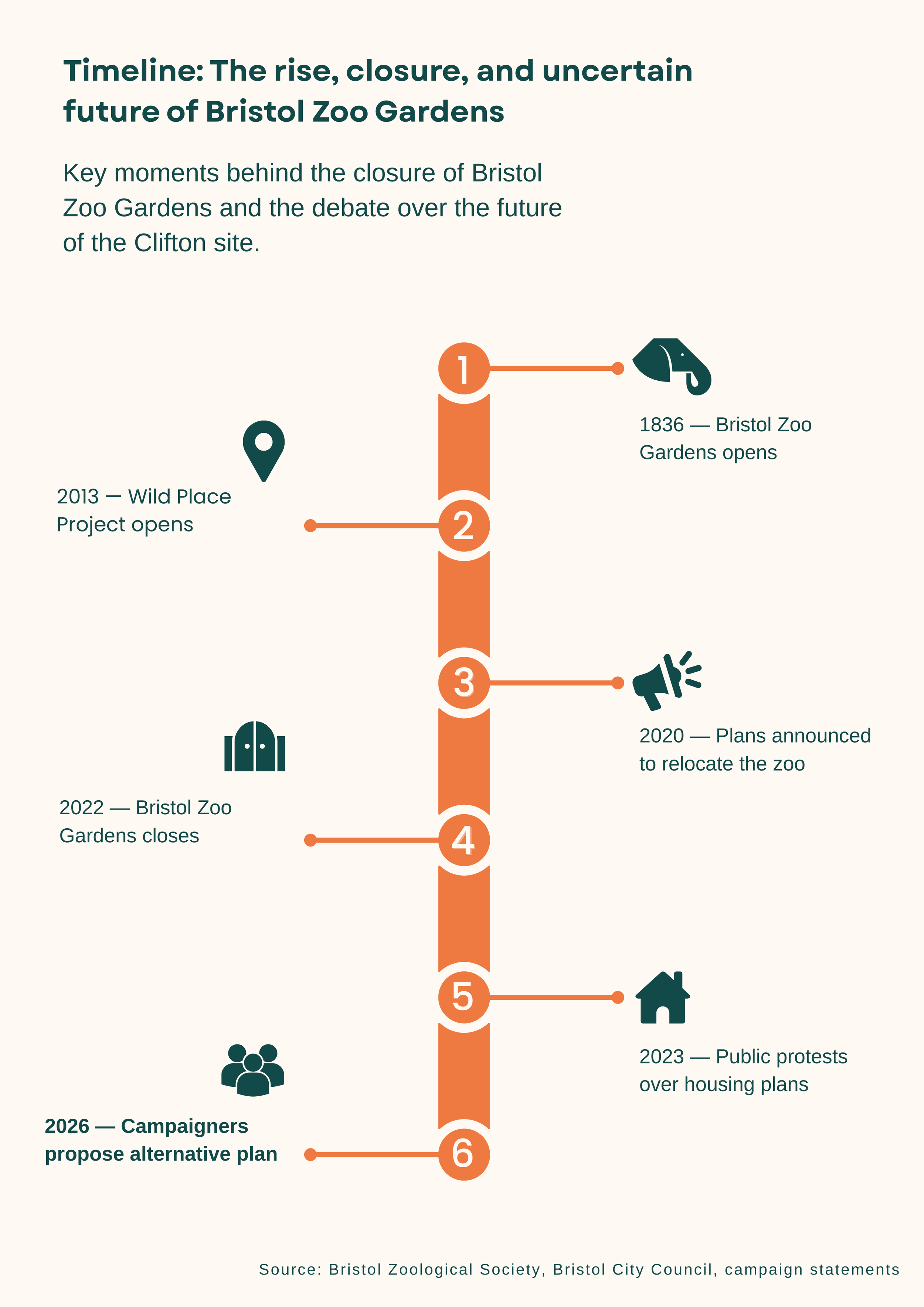
Bristol Zoo Gardens was the world’s fifth oldest zoo when it closed its doors to the public in 2022 after 186 years.
Map: Key locations in the Bristol Zoo Gardens redevelopment debate
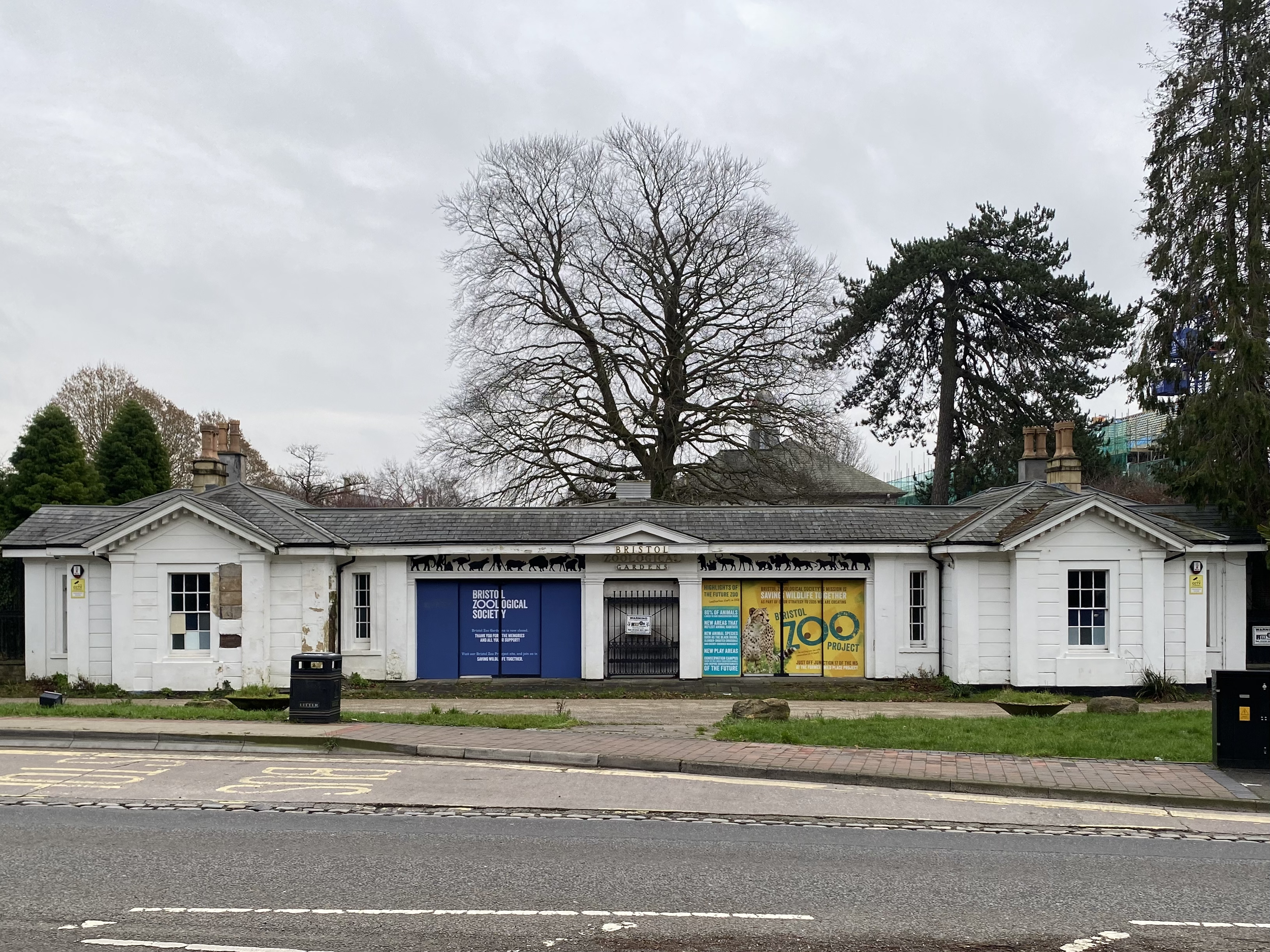
Bristol Zoo Gardens in Clifton closed to the public in 2022 and is now earmarked for redevelopment. Image: Stephanie Meadows
KEY MOMENTS IN THE BRISTOL ZOO GARDENS REDEVELOPMENT DEBATE
The meeting, attended by dozens of residents, former staff, and campaign supporters, was held by the campaign group Save Bristol Zoo Gardens.
Tom Jones, organiser of the Save Bristol Zoo Gardens campaign, said: “This is about showing people that it isn’t a done deal.”
The campaigners rejected suggestions that the closure and planned redevelopment of Bristol Zoo Gardens was inevitable, and argued that alternatives were not fully explored before the decision to sell the site for housing was made.
Joe Allotey, a former senior staff member at the zoo, said the proposal was intended to show that alternative futures for the site remain an option.
Allotey said: “Bristol could still end up with something fantastic from that site.”
Campaigners said that their plan would reopen Bristol Zoo Gardens as a smaller, all-weather site combining gardens, education, and limited animal exhibits, adapted to the site’s physical constraints.
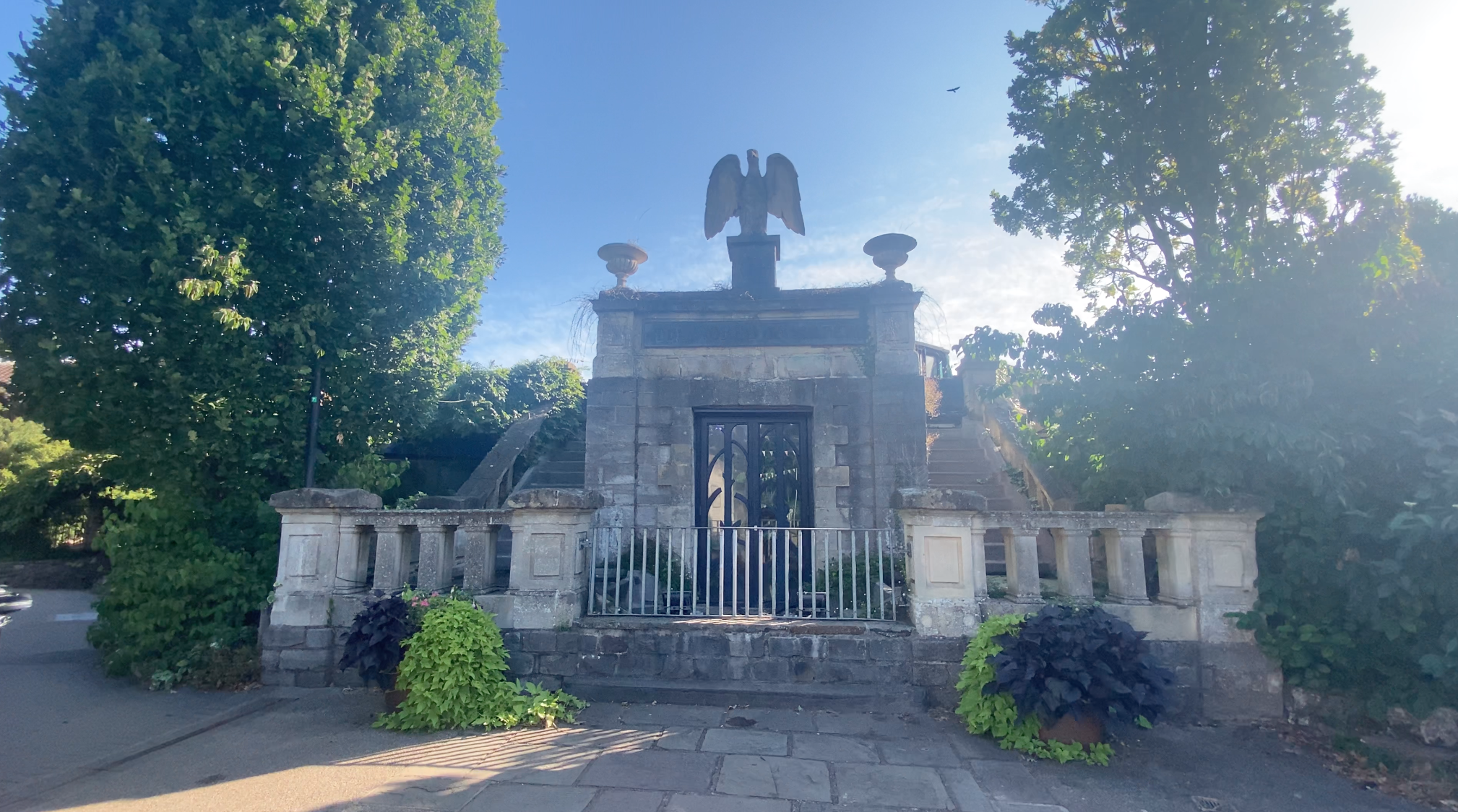
Much of the former Bristol Zoo Gardens site remains intact, including historic buildings and mature trees. Image: Stephanie Meadows
Campaigners also questioned the financial reasoning behind the site’s closure, citing published accounts showing increased borrowing in recent years and raising concerns about reliance on future visitor growth at the society’s remaining site, Bristol Zoo Project.
Questions were also raised about Acorn Property Group, the developer in line to buy the Clifton site. Speakers referenced a Financial Conduct Authority warning relating to companies trading under the Acorn Property Invest name, which is linked to the organisation.
Jones said the campaign was calling for greater transparency around how key decisions were made.
Campaigners also questioned how decisions were made, arguing that these had mainly taken place at the senior leadership level, and that other staff expertise had not been sufficiently factored in before the closure.
A comparison of the current Clifton zoo site and proposed redevelopment plans.
Bristol Zoological Society disputed this, saying it had held an extensive public consultation and that the decision to close the site followed a rigorous process that involved the assessment of different options.
In a statement provided to Step(h) into Nature, Justin Morris, chief executive of Bristol Zoological Society, said: “The Clifton site does not work as a modern conservation zoo.”
The Society also shared that it has exchanged sale contracts for the Bristol Zoo Gardens site and expects the sale to complete shortly, following the dismissal of a judicial review brought by another campaign group, Save Bristol Zoo Alliance.
The charity has said that its strategy focuses on developing Bristol Zoo Project, which is a larger site to the north of the city, where it believes improved animal welfare and conservation outcomes can be delivered.
A spokesperson said the redevelopment plans for Bristol Zoo Gardens include 196 new homes, 20 per cent of which would be affordable, alongside a new public park, café, playground, and conservation hub, with the gardens becoming freely accessible for the first time.
The Society has also said that delays to the sale of the Clifton site have affected its finances and slowed investment in new visitor infrastructure, which has contributed to cost-cutting measures such as staff redundancies.
With possession yet to transfer and planning decisions still to be finalised, the future of the former Bristol Zoo Gardens site remains uncertain.
The reporter previously worked for Bristol Zoological Society.
Want more climate action news in your life? Join my email list to get updates, resources, and job opportunities straight to your inbox!